Vauxhall Station office removals for businesses in Lambeth
Posted on 15/05/2026
If you are moving a workplace near Vauxhall Station, you probably already know the awkward bits: tight time windows, busy roads, shared entrances, lift bookings, and the not-so-small problem of keeping staff productive while boxes are being packed. That is exactly why Vauxhall Station office removals for businesses in Lambeth need a proper plan, not a last-minute scramble. The best moves are rarely the dramatic ones; they are the organised, slightly boring ones that quietly go right. And that is a good thing.
This guide explains how office removals work in this part of Lambeth, what businesses should prepare for, where the real risks are, and how to make the move smoother for everyone involved. Whether you are relocating a small studio, a professional practice, or a growing company with a mixed setup of desks, filing, IT kit, and fragile equipment, the right approach can save time, money, and a fair bit of stress.
Why Vauxhall Station office removals for businesses in Lambeth Matters
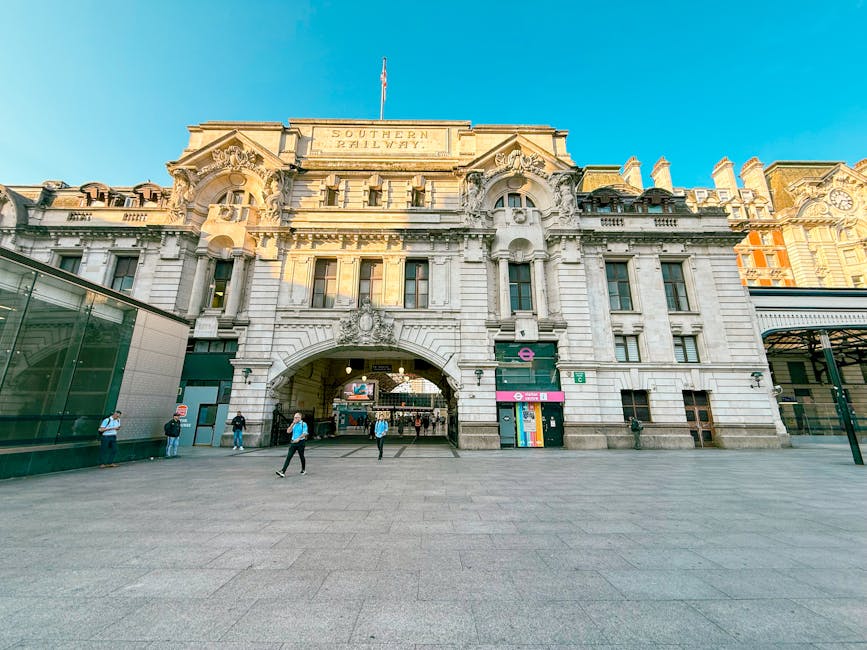
Vauxhall is one of those places where the geography matters as much as the move itself. The station area is busy, well connected, and commercially active, which is brilliant for business, but it also means removals have to be handled with a bit of local awareness. You are dealing with central-London style logistics without the luxury of slack time. Loading access can be limited, parking may need planning, and even a small delay can ripple through the rest of the day.
For businesses in Lambeth, office relocation is rarely just a change of address. It can affect client service, internal communication, data security, equipment handling, and staff morale. A smooth move helps protect all of that. A messy move, on the other hand, tends to show up in lost hours, broken routines, and a pile of unresolved admin that nobody wants after the van has gone. Truth be told, the move itself is only half the job; the real work is reducing disruption.
There is also the local factor. Businesses based around Vauxhall often serve clients across Lambeth and wider London, so keeping the move efficient matters for reputation too. If your team regularly works in person, receives deliveries, or depends on face-to-face meetings, relocation timing becomes a business decision rather than just a moving date.
For a broader look at how moving services fit into the local area, you may also find the page on removal services in Lambeth helpful, especially if your office move involves more than just desks and chairs.
How Vauxhall Station office removals for businesses in Lambeth Works
Most office removals follow the same broad pattern, but the details make all the difference. Near Vauxhall Station, the process usually starts with assessing access, lift availability, parking restrictions, and the volume of items to be moved. Once the moving team understands the layout and workload, they can suggest the right vehicle size, crew size, packing support, and move timing.
A typical business relocation has four practical stages:
- Planning and survey - identifying what is moving, what is being discarded, what needs special handling, and how access will work at both ends.
- Packing and labelling - boxing documents, office supplies, IT equipment, and personal items in a way that makes unpacking sane rather than chaotic.
- Transport and handling - loading securely, protecting furniture, and making sure fragile or awkward items are not left to bounce around in transit.
- Set-up and placement - delivering items to the right rooms or zones so the team can get back to work quickly.
In practice, the move may be spread across evenings, weekends, or staged phases if the business cannot pause entirely. That is often the sensible option. A law firm, design agency, or small finance office may not want everybody packing at once, and a phased relocation can keep customer-facing work moving while back-office functions are transferred in sequence.
If you are comparing move formats, it can also help to review office removals in Lambeth alongside the wider services overview so you can see which option suits your building, timeline, and budget.
Key Benefits and Practical Advantages
There are a few clear reasons why a well-managed office move near Vauxhall is worth the effort.
- Less downtime - a structured move means staff can return to normal work sooner.
- Better asset protection - office furniture, monitors, printers, servers, and filing systems are handled with more care.
- Cleaner organisation - labelled boxes and room-by-room delivery make the first day in the new space much less painful.
- Reduced stress for staff - people can focus on their jobs rather than trying to remember where the client folder ended up.
- Improved continuity - clients, suppliers, and deliveries can be managed with fewer interruptions.
There is a quieter benefit too: a move can force a useful reset. Many businesses use relocation to declutter old storage, retire damaged chairs, digitise paperwork, or rethink the office layout. That is especially handy if you are moving from a cramped old unit into a more flexible workspace. Let's face it, nobody misses that one wobbly desk nobody admitted to owning.
In some cases, business owners also combine office relocation with a wider property change across the borough. For those situations, Lambeth local knowledge can help, and the guides on buying property in Lambeth and selling a home in Lambeth can be useful if the move is tied to a bigger transition.
Who This Is For and When It Makes Sense
This kind of move is relevant for a wide range of businesses, not just large companies with a dedicated facilities team. In Lambeth, you will often see office relocations for:
- small and medium-sized businesses moving to a better-sized workspace
- professional services firms such as accountants, solicitors, consultants, and recruitment agencies
- creative studios with equipment, artwork, or specialist desks
- start-ups scaling from a shared space into a private office
- retail support teams or head office functions attached to nearby commercial sites
- organisations consolidating two spaces into one
It makes sense to book proper office removal support when the move involves fragile kit, deadlines, multiple staff members, or any need to keep operating during the transition. If you are moving a few lightweight items, you might manage with a smaller vehicle. If you are shifting an entire office setup, though, trying to "just do it ourselves" often becomes more expensive than expected. People underestimate the number of trips. Every time.
For smaller business moves, a local service like man and van in Lambeth or man with van in Lambeth can be practical. For larger or more structured commercial relocations, a dedicated office removals service is usually the better fit.
Step-by-Step Guidance
Here is a straightforward way to approach the move without overcomplicating it.
1. Confirm the moving date early
Choose a date that works around business peaks, client deadlines, and building access. If your lease ends on a certain day, do not leave the move to the last minute. Vauxhall traffic, lift bookings, and parking permissions can all shrink your margin fast.
2. Audit everything that needs to move
Make a list of desks, chairs, filing cabinets, monitors, desktop computers, kitchen items, archive boxes, stationery, and anything that lives in drawers no one wants to open. Decide what is moving, what is being recycled, and what can stay behind. This stage matters more than people think. It stops the move being cluttered with dead weight.
3. Assign internal responsibility
One person should coordinate the move, even if they are not carrying boxes. That person becomes the point of contact for staff, movers, building management, IT support, and landlords. Without that, small decisions get delayed. A printer issue becomes a half-hour debate. Nobody needs that on moving day.
4. Prepare sensitive items separately
Back up data, remove confidential files from open desks, and make sure any devices with stored information are properly managed. If your office handles client records or business-sensitive material, keep those items controlled and clearly labelled. The same goes for any equipment that needs to be disconnected safely before moving.
5. Pack by department or room
Use a label system that makes sense to the people who will unpack. For example: reception, finance, meeting room, marketing, IT, archive. Numbered boxes are useful, but only if someone can read the numbering system without a long explanation and a cup of tea.
6. Plan access at both ends
Check door widths, lift size, staircase access, loading restrictions, and whether any equipment will require more than two people to handle. A move can look simple on paper and then stall at the first narrow corner. If your building has difficult access, flag it early. There is a useful local example of how access changes planning in the article about narrow-access removals in Lambeth.
7. Move in stages if needed
For many businesses, a phased move is better than a single dramatic handover. You might move archive storage first, then non-essential furniture, then IT, then staff workstations. It keeps the business functioning and gives everyone a little room to breathe.
8. Test the new setup quickly
As items arrive, make sure internet, power, phones, and key workstations are functioning. If you spot a problem early, it is easier to fix. On the first morning, small things matter. The kettle, the Wi-Fi, the printer. The universe is always the universe, but office moves are especially unforgiving at 8:45 a.m.
Expert Tips for Better Results
These are the practical habits that tend to separate a calm relocation from a messy one.
- Start purging early. Old files, broken stands, surplus chairs, and unused marketing displays only create extra handling work.
- Book the move around building access. In central and inner London, the best slot is often the one that avoids busy loading periods.
- Label cables before unplugging. A small roll of tape and a marker can save a surprising amount of grief later.
- Photograph desk setups. If people have a specific monitor arrangement or workstation layout, photos are a cheap insurance policy.
- Keep a first-day essentials box. Think router, chargers, keys, cleaning wipes, bin bags, basic stationery, and a kettle if the office culture is built around one. Which, in the UK, it usually is.
- Tell clients and suppliers in advance. A good move goes unnoticed by outsiders. A bad one becomes everyone else's problem.
Small detail, big difference. That tends to be the pattern.
It also helps to work with a provider that is transparent about support, insurance, and scheduling. If you want to compare providers in a broader sense, the page on removal companies in Lambeth is a sensible place to start.

Common Mistakes to Avoid
Office moves usually go wrong in predictable ways. The good news is that most of them are avoidable.
- Underestimating the volume - offices always contain more stuff than the team remembers.
- Ignoring access constraints - one bad loading assumption can derail the whole schedule.
- Poor labelling - boxes without labels tend to migrate to the wrong rooms and stay there.
- Forgetting IT and network dependencies - a workspace without internet is not really a workspace.
- Not planning disposal - old furniture and archive waste need a proper route out.
- Leaving staff uninformed - people perform better when they know what is happening and when.
- Trying to move everything at once - sometimes phased is just smarter.
A common one is assuming that because the office is "only down the road," the move will be simple. It might be a short journey, sure. But short distance does not mean short logistics. In Vauxhall, the surrounding traffic pattern and building access often matter more than mileage.
Tools, Resources and Recommendations
For a more organised office move, the right tools make the whole thing easier. You do not need a warehouse of equipment, but a few sensible basics help a lot.
- Strong moving crates and boxes for files, stationery, and personal items
- Bubble wrap and protective blankets for fragile office equipment and furniture surfaces
- Labels and colour coding to identify departments, floors, or rooms
- Furniture tools for dismantling desks, shelving, or modular systems
- Tape, cable ties, and markers for simple but essential organisation
- Trolleys or dollies if the building layout requires repeated internal handling
If you need packing support, it is worth looking at packing and boxes in Lambeth rather than trying to source everything piecemeal. For furniture-heavy jobs, furniture removals in Lambeth can be especially useful because office desks and storage units are often awkward in ways that cardboard simply is not.
Storage can also be a practical bridge if your old office exit and new office access do not line up neatly. In that case, storage in Lambeth can help you stage the move instead of forcing everything through on one day.
And if you are comparing move sizes or vehicle options, it is worth checking removal van hire in Lambeth as well as man with a van services in Lambeth so you can match the transport to the actual job rather than guessing.
Law, Compliance, Standards, or Best Practice
Office removals are not usually complicated legally, but businesses should still treat them with care. The main issues tend to be health and safety, building access rules, insurance, and the secure handling of business property and records. If employees are involved in packing or moving tasks, the work should be organised in a way that avoids unnecessary strain or unsafe lifting.
In the UK, sensible best practice includes assessing manual handling risks, protecting valuable or confidential items, and making sure any removal team working on-site understands the premises rules. If your office contains sensitive information, data-bearing devices, or client files, those items should be managed in line with your own internal policies and any relevant contractual obligations. That part is not glamorous, but it matters.
It is also worth checking insurance arrangements before the move begins. Ask what is covered, what is excluded, and whether there are any conditions for items like electronics, specialist furniture, or particularly heavy equipment. The page on insurance and safety is useful if you want to understand how risk is approached more broadly.
For businesses that care about responsible operations, sustainability may also be part of the picture. Reusing boxes, donating usable furniture, and recycling correctly all help reduce waste. You can read more in the company's recycling and sustainability information if environmental handling is important to your organisation.
Finally, any service agreement should be clear on timing, access, cancellation, and payment expectations. If you are comparing providers, do not skip the small print. It saves arguments later, and nobody has time for those.
Options, Methods, or Comparison Table
Different business moves need different approaches. Here is a simple comparison to help you decide what is likely to fit best.
| Move option | Best for | Strengths | Watch-outs |
|---|---|---|---|
| Dedicated office removals | Full or medium-sized business relocations | Structured planning, better handling of office furniture and equipment, less disruption | Needs advance booking and clear coordination |
| Man and van support | Smaller office moves or partial relocations | Flexible, often practical for short-distance jobs | May be less suitable for large volumes or complex access |
| Phased relocation | Businesses that must stay operational | Reduces downtime and pressure on staff | Requires strong scheduling and room-by-room tracking |
| Storage-assisted move | Moves with timing gaps or fit-out delays | Gives breathing room when handover dates do not align | Adds an extra handling stage and storage cost |
If you are unsure which route fits, a short planning discussion is usually enough to narrow it down. The right choice depends on more than price. Access, distance, staff impact, and building rules all count. A lot.
Case Study or Real-World Example
Imagine a small professional services firm moving from a shared office near Vauxhall Station into a larger private suite elsewhere in Lambeth. The team has eight desks, two filing cabinets, several monitors, one heavy storage unit, a printer, and years of paperwork that nobody wants to touch until absolutely necessary. Classic office move material.
Instead of moving everything in one chaotic sweep, the business splits the relocation into three parts. First, non-essential items and archived boxes go out. Second, the furniture is dismantled and moved with careful labelling. Third, the IT and staff desk setups are handled last, just before reopening. The team also notifies clients in advance and keeps a small working corner live until the final handover.
The result is not magical, just sensible. The move is less disruptive, the staff are less frazzled, and the new office is usable much sooner. There may still be one box nobody can identify for a week, because that is apparently part of the ritual, but the business keeps functioning. That is what matters.
This kind of approach is common among businesses that value continuity. It is especially useful in Lambeth, where office spaces can vary a lot in layout and access. A careful plan beats a rushed one almost every time.
Practical Checklist
Use this as a working checklist before moving day.
- Confirm the moving date and access times for both buildings
- Check lift availability, parking, and loading restrictions
- Assign one person to coordinate the move
- List everything that is moving, storing, recycling, or disposing of
- Back up data and secure confidential documents
- Label boxes by department, room, or workstation
- Dismantle furniture only if it helps safe handling
- Protect monitors, printers, and fragile equipment properly
- Notify staff, clients, and suppliers about the move
- Prepare a first-day essentials box
- Check insurance, service terms, and any building rules
- Test internet, power, phones, and key systems after arrival
It is a simple list, but it covers the jobs that matter. If you tick these off properly, the move already has a much better chance of feeling manageable.
Conclusion
Vauxhall Station office removals for businesses in Lambeth are about more than transport. They are about protecting time, keeping staff sane, and making sure the business can keep operating through a major change. With the right planning, clear labelling, sensible timing, and an eye on access and compliance, an office move can be orderly rather than overwhelming.
The local context matters, the details matter, and small decisions early on usually decide how the day feels later. If you are moving soon, keep the process practical, ask the awkward questions before moving day, and do not be shy about asking for help where it saves stress. That is just good business.
Get a free quote today and see how much you can save.
And if you want to explore more local guidance while planning your move, the pages on removals in Lambeth and about the company are useful next steps.